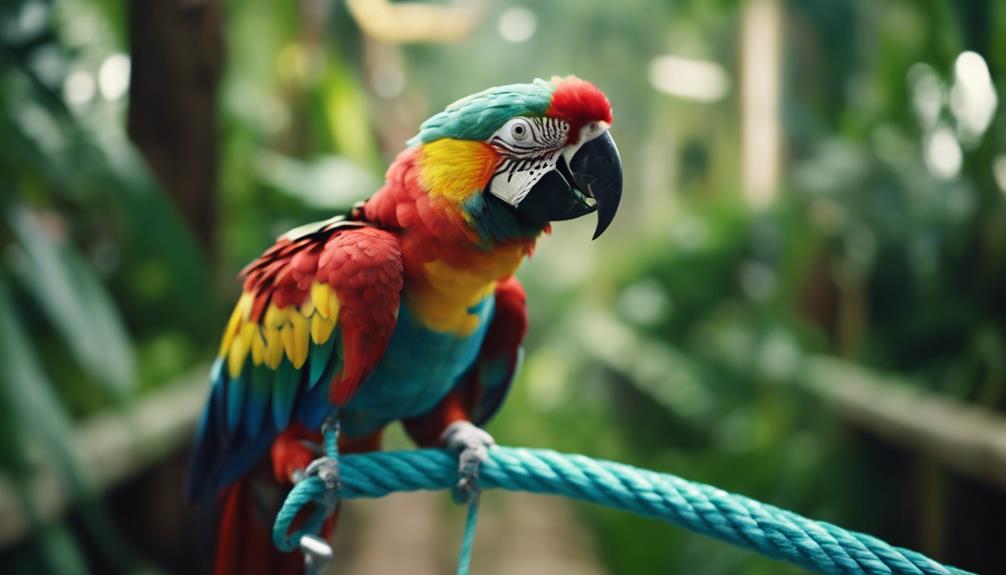
Exotic Pet Training For Leash Walking

training exotic pets safely

To train your exotic pet for leash walking, start by selecting the right harness and leash for a proper fit. Use positive reinforcement techniques like clicker training and target training to build trust and reward desired behaviors. Gradually introduce the leash indoors, rewarding curiosity or calmness. Troubleshoot challenges like reactive behavior by identifying triggers and using desensitization exercises. Address pulling on the leash with redirection using treats or toys. Remember, mastering leash walking benefits physical exercise, mental stimulation, bonding, and socialization for your exotic pet. The key is consistency and patience in your training approach.

Benefits of Leash Walking for Exotic Pets

Leash walking offers significant benefits for exotic pets, helping to promote physical exercise and mental stimulation. For exotic animals like sugar gliders, ferrets, or even bearded dragons, the opportunity to explore the world outside their enclosures is invaluable. The mental stimulation they receive from experiencing new sights, sounds, and smells during walks is vital for keeping their minds active and engaged.

Additionally, leash walking provides a unique chance for bonding between you and your exotic pet. The shared experience of exploring the outdoors together can strengthen the bond you have with your pet and build trust. As you walk side by side, your pet learns to look to you for guidance and reassurance, deepening your connection.

Club Link Out

Moreover, the physical exercise that leash walking offers is essential for exotic pets to maintain a healthy weight and overall well-being. Many exotic animals have high energy levels and need opportunities to burn off excess energy. Regular walks can help them stay active, prevent obesity, and improve their overall physical health.

Lastly, leash walking can also aid in the socialization of your exotic pet. By exposing them to different environments, people, and animals, you can help them become more comfortable and confident in various situations. This exposure can reduce fear and anxiety, making your pet more adaptable and sociable in the long run.

Choosing the Right Leash and Harness

To guarantee a successful leash walking experience with your exotic pet, it's crucial to carefully choose the appropriate harness and leash that suit their size and comfort needs. When selecting a harness, make sure it fits properly to prevent any discomfort or potential escape. Measure your pet's chest and neck circumference to determine the right size. Look for harnesses with adjustable straps to achieve a snug yet comfortable fit. Comfort is key, as your pet should be able to move freely without any rubbing or chafing.

Consider the material durability and style when choosing a leash. Exotic pets have different needs, so opt for a leash that matches their strength and behavior. For smaller animals, a lightweight yet sturdy material like nylon may be suitable. Larger or more powerful exotics may require a stronger material such as leather or reinforced fabric. Reflective strips can also be beneficial for added visibility during walks in low light conditions.

The style of the leash can also impact your pet's comfort and your control. Some exotic pets may do better with a longer leash to explore, while others may need a shorter leash for closer guidance. Choose a style that aligns with your pet's behavior and walking habits. By prioritizing proper fit, comfort, material durability, and style, you can set the foundation for a positive leash walking experience with your exotic pet.

Positive Reinforcement Training Techniques

When training your exotic pet for leash walking, implementing positive reinforcement techniques is essential for encouraging desired behaviors. Positive reinforcement focuses on rewarding your pet for exhibiting the behaviors you want to see more of, making the training experience enjoyable and effective. Here are some techniques to help you train your exotic pet using positive reinforcement:

  • Clicker training: Utilize a clicker to create a distinct sound that signals to your pet when they have performed the desired behavior. This method helps in marking the exact moment the behavior occurs, making it easier for your pet to understand what action led to the reward.
  • Shaping behaviors: Break down the desired behavior into smaller achievable steps and reward your pet for each step they successfully complete. Gradually shape these individual behaviors towards the ultimate goal of leash walking, ensuring your pet feels successful at every stage.
  • Target training: Teach your pet to touch a target stick or object with their nose or paw. This not only helps in building trust between you and your pet but also serves as a foundation for more complex behaviors like following the target stick while on a leash.
  • Building trust: Establishing a trusting relationship with your pet is pivotal for successful leash training. Spend quality time bonding with your pet, offering treats, praise, and affection to create a positive association with the training process. Trust forms the basis for effective communication and cooperation during leash walking sessions.

Acclimating Your Exotic Pet to the Leash

To help your exotic pet become comfortable with leash walking, gradually introducing the leash in a positive and encouraging manner is crucial. Start by incorporating bonding exercises into your daily routine. Spend quality time with your pet, engaging in activities they enjoy, such as playing with their favorite toys or offering treats. This will help create a positive association with you and build trust, making the leash introduction smoother.

Once your exotic pet is comfortable with your presence, begin introducing the leash indoors. Allow them to explore the leash at their own pace, rewarding them with treats and praise for showing curiosity or calmness around it. This step-by-step approach will help them feel at ease with the leash's presence before heading outdoors.

Outdoor exploration can be a thrilling experience for your exotic pet, but it's crucial to take it slow. Start by letting them wear the leash indoors and then venture into a secure outdoor area like a backyard. Allow them to investigate their surroundings while on the leash, offering encouragement and treats for positive behavior. Gradually increase the length of your outdoor walks as your pet grows more confident and comfortable with the leash. Remember, patience and positive reinforcement are key to acclimating your exotic pet to leash walking successfully.

Troubleshooting Common Leash Walking Challenges

Dealing with common leash walking challenges demands patience, consistency, and understanding your exotic pet's individual needs. When faced with issues during leash training, it is crucial to employ behavior modification and problem-solving techniques tailored to your unique pet. Here are some strategies to help you troubleshoot common leash walking challenges:

  • Reactive Behavior: If your exotic pet displays reactive behavior such as lunging or barking, try to identify the triggers causing this response. Implement desensitization exercises by gradually exposing your pet to the trigger at a distance where they remain calm, rewarding calm behavior to reshape their response.
  • Pulling on the Leash: For pets that constantly pull on the leash, consider using positive reinforcement techniques. Stop walking when they pull and only proceed when the leash is slack. Reward them for walking beside you to reinforce the desired behavior.
  • Distraction: Exotic pets may get easily distracted during walks, making it challenging to keep their focus. Use high-value treats or toys to redirect their attention back to you and the walking activity.
  • Fear or Anxiety: Pets that exhibit fear or anxiety while on a leash may require gradual desensitization to the equipment. Start by associating the leash with positive experiences at home before venturing outside.

Frequently Asked Questions

Can Any Exotic Pet Be Trained to Walk on a Leash, or Are There Certain Species That Are More Suited for Leash Walking?

You can train most exotic pets to walk on a leash, but some species may face leash training challenges. Small mammals like sugar gliders and certain reptiles, such as bearded dragons, are often the best exotic pets for leash walking.

What Should I Do if My Exotic Pet Is Afraid of the Leash or Harness?

If your exotic pet is afraid of the leash or harness, start by introducing them to it gradually. Use leash desensitization techniques and positive reinforcement to help them overcome their fear. Consistent training will help alleviate their fear response.

Are There Any Potential Health Risks or Concerns Associated With Leash Walking Exotic Pets?

When leash walking exotic pets, consider potential health risks and training techniques. Guarantee leash safety for exotic species by gradually introducing it. Monitor for stress signs and adjust as needed. Always prioritize your pet's well-being.

How Long Does It Typically Take to Train an Exotic Pet to Walk on a Leash?

Leash training timelines vary depending on the pet's breed, age, and temperament. Success stories show that consistency, patience, and positive reinforcement are key. Tips and tricks like starting indoors, using treats, and short sessions help expedite the process.

Is It Possible to Train Multiple Exotic Pets to Walk on a Leash Together, or Should They Each Be Trained Individually?

When training multiple exotic pets to walk on a leash together, consider the benefits of group training like socialization and bonding. Challenges may arise due to individual differences, so start with basic leash walking skills before advancing.

Conclusion

To sum up, leash walking can provide numerous benefits for your exotic pet, such as exercise, mental stimulation, and bonding time. By choosing the right equipment, using positive reinforcement techniques, and gradually acclimating your pet to the leash, you can overcome common challenges and enjoy stress-free walks together. With patience and consistency, you can help your exotic pet become a confident and well-behaved leash walker.

A dog showcased as part of an advertisement for pet care products and services. The dog's playful expression and the presence of various text elements suggest that viewers are encouraged to click the button for more information or to take advantage of the mentioned deals.

← Back

Thank you for your response. ✨

Club Link Out
Love Your Pet Logo
		[{"id":8465,"link":"https:\/\/loveyourpet.blog\/exotic-pet-training-for-household-integration\/","name":"exotic-pet-training-for-household-integration","thumbnail":{"url":"https:\/\/loveyourpet.blog\/wp-content\/uploads\/2024\/03\/pet_training_for_exotic_pets.jpg","alt":"pet training for exotic pets"},"title":"Exotic Pet Training For Household Integration","postMeta":[],"author":{"name":"LoveYourPet Team","link":"https:\/\/loveyourpet.blog\/author\/loveyourpet\/"},"date":"Jan 20, 2025","dateGMT":"2025-01-20 17:49:14","modifiedDate":"2025-01-20 11:49:14","modifiedDateGMT":"2025-01-20 17:49:14","commentCount":"0","commentStatus":"closed","categories":{"coma":"<a href=\"https:\/\/loveyourpet.blog\/training\/\" rel=\"category tag\">Training<\/a>","space":"<a href=\"https:\/\/loveyourpet.blog\/training\/\" rel=\"category tag\">Training<\/a>"},"taxonomies":{"post_tag":""},"readTime":{"min":13,"sec":31},"status":"publish","content":"If you're bringing an exotic pet into your home, begin by selecting the right one. Arrange their living space with appropriate enrichment. Monitor behavior and"},{"id":8463,"link":"https:\/\/loveyourpet.blog\/training-exotic-pets-for-veterinary-visits\/","name":"training-exotic-pets-for-veterinary-visits","thumbnail":{"url":"https:\/\/loveyourpet.blog\/wp-content\/uploads\/2024\/03\/training_exotic_pets_calmly.jpg","alt":"training exotic pets calmly"},"title":"Training Exotic Pets For Veterinary Visits","postMeta":[],"author":{"name":"LoveYourPet Team","link":"https:\/\/loveyourpet.blog\/author\/loveyourpet\/"},"date":"Jan 20, 2025","dateGMT":"2025-01-20 17:49:14","modifiedDate":"2025-01-20 11:49:14","modifiedDateGMT":"2025-01-20 17:49:14","commentCount":"0","commentStatus":"closed","categories":{"coma":"<a href=\"https:\/\/loveyourpet.blog\/training\/\" rel=\"category tag\">Training<\/a>","space":"<a href=\"https:\/\/loveyourpet.blog\/training\/\" rel=\"category tag\">Training<\/a>"},"taxonomies":{"post_tag":""},"readTime":{"min":10,"sec":48},"status":"publish","content":"Prepare your exotic pets for vet visits by observing their behavior cues, using positive reinforcement, and creating a calming pre-visit routine. Choose a sturdy carrier"},{"id":8471,"link":"https:\/\/loveyourpet.blog\/training-exotic-pets-for-photo-shoots\/","name":"training-exotic-pets-for-photo-shoots","thumbnail":{"url":"https:\/\/loveyourpet.blog\/wp-content\/uploads\/2024\/03\/capturing_animals_in_action-1.jpg","alt":"capturing animals in action"},"title":"Training Exotic Pets For Photo Shoots","postMeta":[],"author":{"name":"LoveYourPet Team","link":"https:\/\/loveyourpet.blog\/author\/loveyourpet\/"},"date":"Jan 20, 2025","dateGMT":"2025-01-20 17:49:13","modifiedDate":"2025-01-20 11:49:13","modifiedDateGMT":"2025-01-20 17:49:13","commentCount":"0","commentStatus":"closed","categories":{"coma":"<a href=\"https:\/\/loveyourpet.blog\/training\/\" rel=\"category tag\">Training<\/a>","space":"<a href=\"https:\/\/loveyourpet.blog\/training\/\" rel=\"category tag\">Training<\/a>"},"taxonomies":{"post_tag":""},"readTime":{"min":10,"sec":40},"status":"publish","content":"Training exotic pets for photo shoots involves choosing the right pet with a good temperament. Set up a photo-friendly environment with proper lighting. Build trust"},{"id":8469,"link":"https:\/\/loveyourpet.blog\/exotic-pet-training-for-fear-and-anxiety\/","name":"exotic-pet-training-for-fear-and-anxiety","thumbnail":{"url":"https:\/\/loveyourpet.blog\/wp-content\/uploads\/2024\/03\/exotic_pet_anxiety_training.jpg","alt":"exotic pet anxiety training"},"title":"Exotic Pet Training For Fear And Anxiety","postMeta":[],"author":{"name":"LoveYourPet Team","link":"https:\/\/loveyourpet.blog\/author\/loveyourpet\/"},"date":"Jan 20, 2025","dateGMT":"2025-01-20 17:49:13","modifiedDate":"2025-01-20 11:49:13","modifiedDateGMT":"2025-01-20 17:49:13","commentCount":"0","commentStatus":"closed","categories":{"coma":"<a href=\"https:\/\/loveyourpet.blog\/training\/\" rel=\"category tag\">Training<\/a>","space":"<a href=\"https:\/\/loveyourpet.blog\/training\/\" rel=\"category tag\">Training<\/a>"},"taxonomies":{"post_tag":""},"readTime":{"min":16,"sec":26},"status":"publish","content":"Train your exotic pet using species-specific techniques to tackle fear and anxiety effectively. Identify triggers, employ positive reinforcement, and create a stress-free environment for your"},{"id":8467,"link":"https:\/\/loveyourpet.blog\/training-your-exotic-pet-snake\/","name":"training-your-exotic-pet-snake","thumbnail":{"url":"https:\/\/loveyourpet.blog\/wp-content\/uploads\/2024\/03\/exotic_pet_snake_training.jpg","alt":"exotic pet snake training"},"title":"Training Your Exotic Pet Snake","postMeta":[],"author":{"name":"LoveYourPet Team","link":"https:\/\/loveyourpet.blog\/author\/loveyourpet\/"},"date":"Jan 20, 2025","dateGMT":"2025-01-20 17:49:13","modifiedDate":"2025-01-20 11:49:13","modifiedDateGMT":"2025-01-20 17:49:13","commentCount":"0","commentStatus":"closed","categories":{"coma":"<a href=\"https:\/\/loveyourpet.blog\/training\/\" rel=\"category tag\">Training<\/a>","space":"<a href=\"https:\/\/loveyourpet.blog\/training\/\" rel=\"category tag\">Training<\/a>"},"taxonomies":{"post_tag":""},"readTime":{"min":13,"sec":12},"status":"publish","content":"To train your exotic pet snake, start with choosing the right species that suits your lifestyle. Create a cozy habitat with proper temperature and hiding"},{"id":8473,"link":"https:\/\/loveyourpet.blog\/exotic-pet-training-for-leash-walking\/","name":"exotic-pet-training-for-leash-walking","thumbnail":{"url":"https:\/\/loveyourpet.blog\/wp-content\/uploads\/2024\/03\/training_exotic_pets_safely.jpg","alt":"training exotic pets safely"},"title":"Exotic Pet Training For Leash Walking","postMeta":[],"author":{"name":"LoveYourPet Team","link":"https:\/\/loveyourpet.blog\/author\/loveyourpet\/"},"date":"Jan 20, 2025","dateGMT":"2025-01-20 17:49:12","modifiedDate":"2025-01-20 11:49:12","modifiedDateGMT":"2025-01-20 17:49:12","commentCount":"0","commentStatus":"closed","categories":{"coma":"<a href=\"https:\/\/loveyourpet.blog\/training\/\" rel=\"category tag\">Training<\/a>","space":"<a href=\"https:\/\/loveyourpet.blog\/training\/\" rel=\"category tag\">Training<\/a>"},"taxonomies":{"post_tag":""},"readTime":{"min":7,"sec":40},"status":"publish","content":"To train your exotic pet for leash walking, start by selecting the right harness and leash for a proper fit. Use positive reinforcement techniques like"},{"id":5694,"link":"https:\/\/loveyourpet.blog\/how-to-photograph-pets-with-props\/","name":"how-to-photograph-pets-with-props","thumbnail":{"url":"https:\/\/loveyourpet.blog\/wp-content\/uploads\/2024\/03\/pet_photography_with_creative_props.jpg","alt":"pet photography with creative props"},"title":"How To Photograph Pets With Props","postMeta":[],"author":{"name":"LoveYourPet Team","link":"https:\/\/loveyourpet.blog\/author\/loveyourpet\/"},"date":"Mar 22, 2024","dateGMT":"2024-03-22 12:19:40","modifiedDate":"2024-03-22 07:20:06","modifiedDateGMT":"2024-03-22 12:20:06","commentCount":"0","commentStatus":"closed","categories":{"coma":"<a href=\"https:\/\/loveyourpet.blog\/photography\/\" rel=\"category tag\">Photography<\/a>","space":"<a href=\"https:\/\/loveyourpet.blog\/photography\/\" rel=\"category tag\">Photography<\/a>"},"taxonomies":{"post_tag":""},"readTime":{"min":11,"sec":17},"status":"publish","content":"When photographing pets with props, select items that match their personality and comfort. Opt for interactive props for playful pets and softer ones for reserved"},{"id":5700,"link":"https:\/\/loveyourpet.blog\/how-to-make-pets-comfortable-for-photography\/","name":"how-to-make-pets-comfortable-for-photography","thumbnail":{"url":"https:\/\/loveyourpet.blog\/wp-content\/uploads\/2024\/03\/pets_and_photography_tips.jpg","alt":"pets and photography tips"},"title":"How To Make Pets Comfortable For Photography","postMeta":[],"author":{"name":"LoveYourPet Team","link":"https:\/\/loveyourpet.blog\/author\/loveyourpet\/"},"date":"Mar 22, 2024","dateGMT":"2024-03-22 12:19:39","modifiedDate":"2024-03-22 07:20:05","modifiedDateGMT":"2024-03-22 12:20:05","commentCount":"0","commentStatus":"closed","categories":{"coma":"<a href=\"https:\/\/loveyourpet.blog\/photography\/\" rel=\"category tag\">Photography<\/a>","space":"<a href=\"https:\/\/loveyourpet.blog\/photography\/\" rel=\"category tag\">Photography<\/a>"},"taxonomies":{"post_tag":""},"readTime":{"min":9,"sec":26},"status":"publish","content":"Make your furry friend comfortable for photos: use props they love, make cozy poses, and natural light. Keep the temperature pleasant. Establish a calm vibe"},{"id":5698,"link":"https:\/\/loveyourpet.blog\/tips-on-photographing-pets-eyes\/","name":"tips-on-photographing-pets-eyes","thumbnail":{"url":"https:\/\/loveyourpet.blog\/wp-content\/uploads\/2024\/03\/capturing_pet_s_eyes_beautifully.jpg","alt":"capturing pet s eyes beautifully"},"title":"Tips On Photographing Pets Eyes","postMeta":[],"author":{"name":"LoveYourPet Team","link":"https:\/\/loveyourpet.blog\/author\/loveyourpet\/"},"date":"Mar 22, 2024","dateGMT":"2024-03-22 12:19:39","modifiedDate":"2024-03-22 07:20:05","modifiedDateGMT":"2024-03-22 12:20:05","commentCount":"0","commentStatus":"closed","categories":{"coma":"<a href=\"https:\/\/loveyourpet.blog\/photography\/\" rel=\"category tag\">Photography<\/a>","space":"<a href=\"https:\/\/loveyourpet.blog\/photography\/\" rel=\"category tag\">Photography<\/a>"},"taxonomies":{"post_tag":""},"readTime":{"min":18,"sec":36},"status":"publish","content":"When photographing your pet's eyes, position them in natural light for enchanting photos. Guarantee sharp focus on their eyes and experiment with different lighting techniques."},{"id":5696,"link":"https:\/\/loveyourpet.blog\/getting-the-perfect-pet-portrait\/","name":"getting-the-perfect-pet-portrait","thumbnail":{"url":"https:\/\/loveyourpet.blog\/wp-content\/uploads\/2024\/03\/capturing_the_essence_beautifully.jpg","alt":"capturing the essence beautifully"},"title":"Getting The Perfect Pet Portrait","postMeta":[],"author":{"name":"LoveYourPet Team","link":"https:\/\/loveyourpet.blog\/author\/loveyourpet\/"},"date":"Mar 22, 2024","dateGMT":"2024-03-22 12:19:39","modifiedDate":"2024-03-22 07:20:05","modifiedDateGMT":"2024-03-22 12:20:05","commentCount":"0","commentStatus":"closed","categories":{"coma":"<a href=\"https:\/\/loveyourpet.blog\/photography\/\" rel=\"category tag\">Photography<\/a>","space":"<a href=\"https:\/\/loveyourpet.blog\/photography\/\" rel=\"category tag\">Photography<\/a>"},"taxonomies":{"post_tag":""},"readTime":{"min":12,"sec":31},"status":"publish","content":"When aiming for the perfect pet portrait, prioritize an experienced photographer in pet photography. Choose a setting that mirrors your pet's personality. Let natural light"},{"id":5706,"link":"https:\/\/loveyourpet.blog\/how-to-photograph-pets-at-play\/","name":"how-to-photograph-pets-at-play","thumbnail":{"url":"https:\/\/loveyourpet.blog\/wp-content\/uploads\/2024\/03\/capturing_playful_pets_perfectly.jpg","alt":"capturing playful pets perfectly"},"title":"How To Photograph Pets At Play","postMeta":[],"author":{"name":"LoveYourPet Team","link":"https:\/\/loveyourpet.blog\/author\/loveyourpet\/"},"date":"Mar 22, 2024","dateGMT":"2024-03-22 12:19:38","modifiedDate":"2024-03-22 07:20:03","modifiedDateGMT":"2024-03-22 12:20:03","commentCount":"0","commentStatus":"closed","categories":{"coma":"<a href=\"https:\/\/loveyourpet.blog\/photography\/\" rel=\"category tag\">Photography<\/a>","space":"<a href=\"https:\/\/loveyourpet.blog\/photography\/\" rel=\"category tag\">Photography<\/a>"},"taxonomies":{"post_tag":""},"readTime":{"min":15,"sec":10},"status":"publish","content":"Capture your pets' playful moments by using a camera with fast shutter speed and varied lenses. Choose locations based on their energy levels and showcase"},{"id":5704,"link":"https:\/\/loveyourpet.blog\/photographing-pets-dealing-with-fur\/","name":"photographing-pets-dealing-with-fur","thumbnail":{"url":"https:\/\/loveyourpet.blog\/wp-content\/uploads\/2024\/03\/capturing_adorable_pets_fur.jpg","alt":"capturing adorable pets fur"},"title":"Photographing Pets: Dealing With Fur","postMeta":[],"author":{"name":"LoveYourPet Team","link":"https:\/\/loveyourpet.blog\/author\/loveyourpet\/"},"date":"Mar 22, 2024","dateGMT":"2024-03-22 12:19:38","modifiedDate":"2024-03-22 07:20:04","modifiedDateGMT":"2024-03-22 12:20:04","commentCount":"0","commentStatus":"closed","categories":{"coma":"<a href=\"https:\/\/loveyourpet.blog\/photography\/\" rel=\"category tag\">Photography<\/a>","space":"<a href=\"https:\/\/loveyourpet.blog\/photography\/\" rel=\"category tag\">Photography<\/a>"},"taxonomies":{"post_tag":""},"readTime":{"min":15,"sec":16},"status":"publish","content":"When photographing pets, dealing with fur may seem tricky, but fret not! Groom your pet before the shoot to manage shedding. Use appropriate lighting to"}]